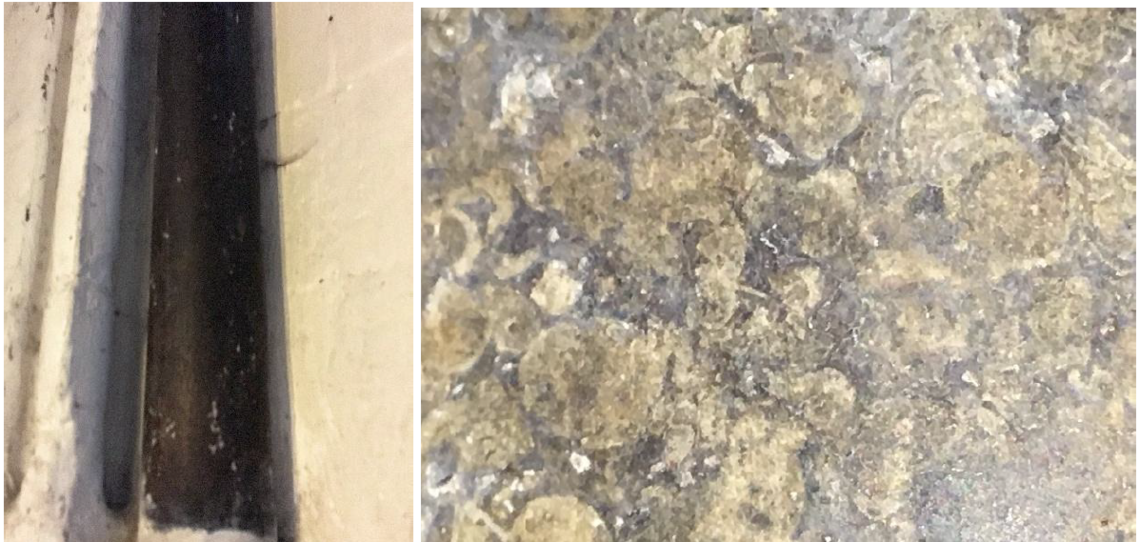
Moving inside the church, almost all the constructional stonework is lime-washed. It is likely that the 13th-century internal walls are Clunch ashlar or rendered rubble and that all internal window and door dressings are Clunch. The only components to have escaped the limewash are the four shafts between the three lancet windows. These are of Purbeck Marble, a hard limestone that takes a polish (Fig. 17). However, it also deteriorates over time, particularly in damp conditions such as an unheated church. The poor condition of the marble and its dark brown colour may also be due to inappropriate historic treatments with wax, oil or resin (Historic England 2021, pp. 12–18).
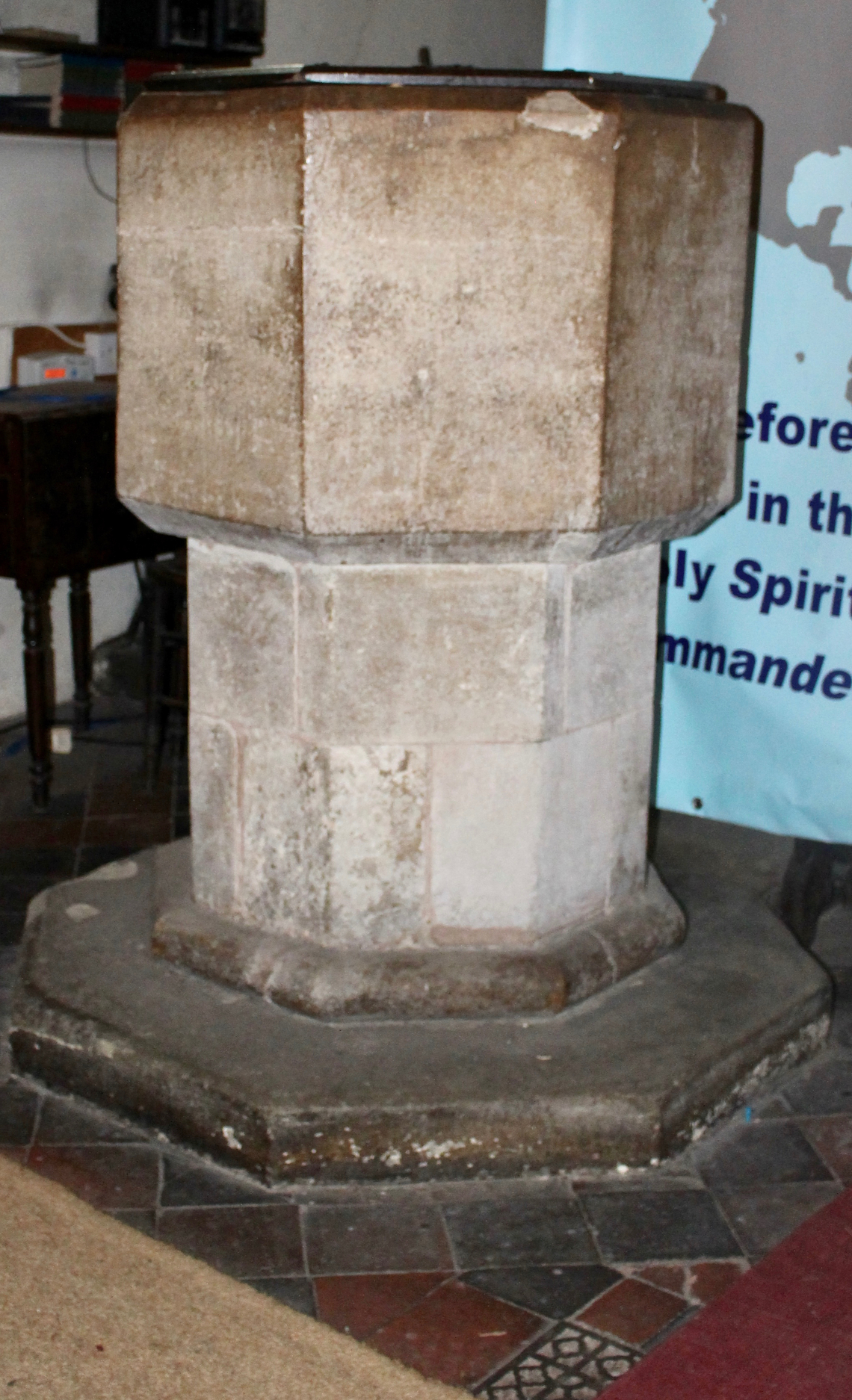
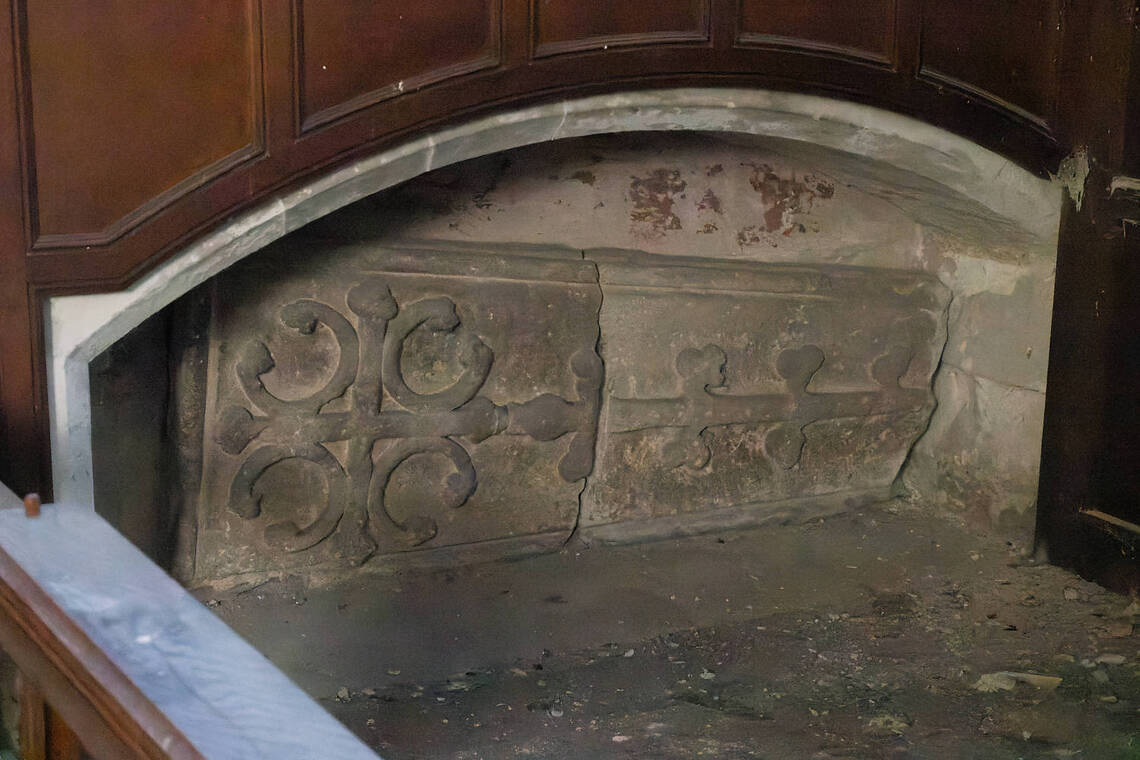
The 13th-century font (in the nave) and coffin lid (in the chancel) are both of Barnack.